

Earlier this year, I found myself doing something slightly ridiculous.
After a run, I would take screenshots of my workout data and copy them into ChatGPT or Anthropic. I wanted feedback. Not generic motivation, not another badge, not a leaderboard position, but a useful interpretation of what had actually happened during the run.
Was my pace stable? Was my heart rate where it should be? Was I improving? Should I push harder next time, or was I already doing enough?
The answers were sometimes useful, but the process was clearly wrong. Screenshots are a poor interface for coaching. They contain some information, but not enough structure. The real value is in the underlying data points: pace, distance, heart rate, effort, recovery, trends over time.
At some point in March or April, the thought became hard to ignore:
There should be a better way to do this.
That was the start of BetterRunning.
Running apps are not short on data
I have tried the usual running apps.
Nike Run Club. Strava. Several others. At the moment I still mostly use Apple’s default workout app to record my runs.
These tools are useful in different ways. They track activity, show progress, and make it easy to look back at what you have done. But I kept running into the same problem: most apps are either too generic, too social, or too focused on doing more.
Run faster. Go further. Beat a previous time. Climb a leaderboard. Collect another achievement.
For some runners, that is motivating. For me, it often feels distracting.
The clearest example is Strava. I understand why people like it, and I understand the appeal of social accountability. But I never felt completely at home in the competitive layer around running. Competing for the fastest time on a piece of local pavement is not why I run. Liking other people’s activities is not the part of running I want to optimize.
There is a tone in many running products that feels very performance-driven. Almost gamified. Sometimes even a bit too American in its energy: more, faster, further, louder.
I have always been more drawn to a quieter, more Scandinavian approach. Running as something personal. Something steady. Something that improves your life without taking it over.
That does not mean I do not care about progress. I do.
But I want progress to be realistic.
The runner I had in mind
BetterRunning is not aimed at professional athletes. It is also not only for people who run once in a while without any particular goal.
The person I had in mind is what I started calling the procreational runner.
A procreational runner is somewhere above purely recreational. Not elite, not professional, but serious enough to care. They run with objectives. They might want to improve their 5K time, build toward a 10K, prepare for a race, run more consistently, or simply understand what kind of training actually helps.
They do not necessarily need a human coach. But they also do not want a generic plan that treats every runner as the same person.
They want guidance that is personal, adaptive, and realistic.
That last word matters. Realistic.
A good running coach does not always tell you to push. Sometimes the best advice is to slow down. Sometimes it is to rest. Sometimes it is to accept that today’s run was affected by poor sleep, stress, heat, fatigue, or simply life.
Most apps are good at measuring effort. Fewer are good at interpreting effort in a humane way.
That became the core philosophy behind BetterRunning: a coaching app that pushes when you are ready, but also tells you when recovery is the better choice.
What BetterRunning became
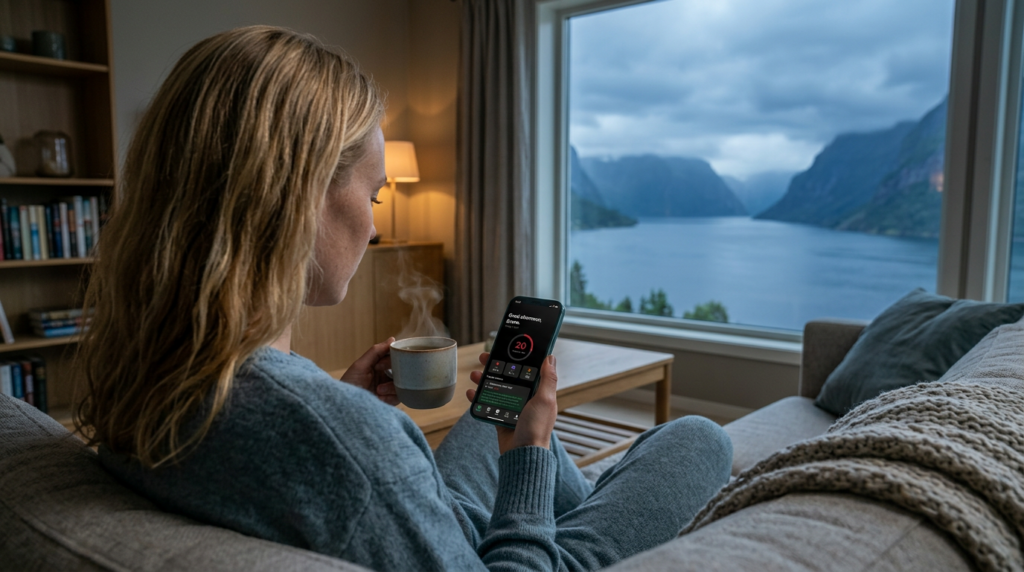
BetterRunning grew from that original frustration: wanting better feedback from real running data instead of screenshots and guesswork.
The app is built around a simple idea: runners need guidance that adapts to them.
That means looking at more than the headline numbers. Average pace matters, but it does not tell the whole story. Heart rate matters, but it needs context. Distance matters, but only in relation to the objective, the training phase, and the runner’s readiness.
BetterRunning is designed to act as a coaching layer around that information.
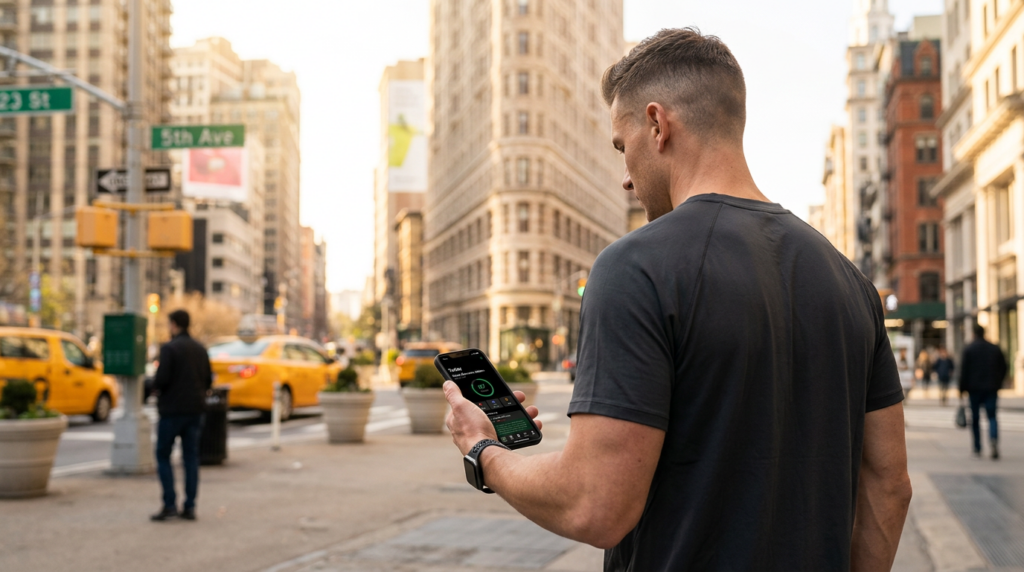
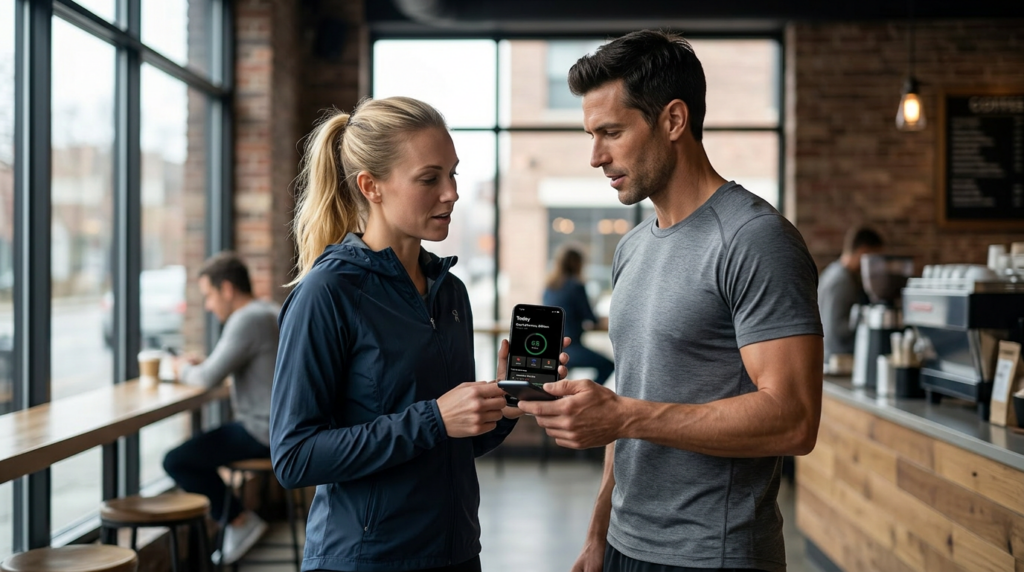
It can help assess where you are, build a plan, give daily training guidance, respond after a run, review a week, and adjust when a plan changes. It can also work with runs recorded outside the app, for example through Garmin or Strava, as long as the data is available through HealthKit.
The goal is not to overwhelm the runner with every possible metric. The goal is to use the right information at the right moment.
For example, running form metrics such as cadence, ground contact time, stride length, vertical oscillation, and running power can be useful. But they should not be thrown at the runner just because they exist. They should only appear when they are relevant.
The same applies to recovery. BetterRunning is built to consider readiness, effort, and context before recommending what to do next. For runners who opt in, it can also take menstrual cycle information into account when adjusting training intensity and recovery advice, without turning that private data into something unnecessarily visible or explicit in the coaching text.
That is the kind of product I wanted to build: modern technology, but with restraint.
Not “more at all costs”.
Better, when better is possible. Rest, when rest is smarter.



Building the app I wanted to use
There was one obvious problem: I was not an iOS developer.
I had enough knowledge around product development to be dangerous. I understood application structure, infrastructure, UX, UI, marketing, and running. I knew what I wanted the app to do and how I wanted it to feel.
But I did not have the specific iOS development skills to simply sit down and build it in the traditional way.
A few years ago, that probably would have stopped the project. Or it would have meant hiring a developer, forming a small team, spending months on specifications, and investing significant money before even knowing whether the idea was worth pursuing.
This time, the path was different.
I built BetterRunning with the help of AI.
That sentence is easy to misunderstand. AI did not magically create a finished app from a vague idea. It did not replace the hard parts of product development. It changed the shape of the work.
Instead of needing a full development team for nine to twelve months, I could make progress myself. The cost was a few hundred euros instead of a large development budget. The speed was completely different.
But the work did not disappear.
If anything, the experience made one thing very clear: building an app has become easier, but building a good app is still hard.
AI is only as good as the direction you give it
The quality of the output depended almost entirely on the quality of the instructions.
When I gave brief instructions, I got shallow results. Technically plausible, maybe even functional, but not thoughtful. The app would work in the narrow sense, but it would not feel right.
When I became more specific, the quality improved.
I had to define the details. The shape of screens. The way interfaces behaved. What buttons should do. How flows should work. What the app should say, and just as importantly, what it should not say.
One of the clearest examples was rolling pace.
When you go out for a run, you have your average pace: the average from the moment you started until now. That is useful, but it can also be blunt. If you slow down for a short section, speed up again, or settle into a rhythm after the first kilometre, average pace reacts slowly.
Rolling pace is different. It looks at a more recent slice of the run: the last number of seconds, the last number of metres, or a recent section of effort. For a runner, that can be much more useful in the moment.
But getting it right was not as simple as telling AI to “add rolling pace”.
The question was not only whether the calculation was technically correct. It was whether the number felt useful while running. It did not need to update every individual second just because it could. It needed the right rhythm, the right stability, the right sensitivity.
The Germans have a good phrase for this: Fingerspitzengefühl. Fingertip feeling.
That was what it took. Going out for runs. Testing the app in the wild. Looking at the watch and asking: is this what I want to see as a runner? Is it too jumpy? Too slow? Too abstract? Does it help me adjust my effort, or does it distract me?
I am still not completely sure I have nailed it. But it is good enough to put into the wild now, learn from real use, and keep improving.
That experience taught me a lot about AI-assisted development.
AI can help you build the thing. But it cannot always tell you whether the thing feels right.
That part still belongs to the person building it.
What I learned from building it
The biggest lesson was not technical.
Yes, I learned a lot about iOS development. I learned how much can be done with modern AI tools, and also where those tools still need very clear human direction. I learned that speed is powerful, but speed without judgment creates noise.
But the more important lesson was about product philosophy.
Every app has an opinion, whether the maker admits it or not.
A running app that highlights leaderboards has an opinion. An app that celebrates streaks has an opinion. An app that pushes harder workouts has an opinion. An app that tells you to rest has an opinion too.
BetterRunning has one as well: running should be personal, sustainable, and intelligent.
That does not mean soft. It does not mean unambitious. It means that ambition should be guided by context.
For most of us, running is not our profession. It lives alongside work, family, sleep, stress, travel, and ordinary life. A good tool should understand that. It should help you keep going, not make you feel like you are constantly failing an invisible competition.
Why I am sharing this now
I am sharing the story now because BetterRunning has become more than a private experiment.
There is documentation. There is a dedicated website. The app has taken shape. It is still evolving, but the underlying idea is clear enough to put into the world.
I also think the development story itself is worth telling.
We are entering a period where more people will be able to build software around specific needs, even without having every technical skill themselves. That is exciting, but it also raises the standard for clarity. If anyone can build an app, the important question becomes: why should this app exist?
For BetterRunning, my answer is simple.
I wanted a running app that felt less like a scoreboard and more like a thoughtful coach. One that uses modern technology without losing sight of the human being doing the running.
That is what I am trying to build.
If that sounds like the kind of running support you have been missing too, you can learn more about BetterRunning at https://betterrunning.app/.